Opportunity
Walk into a trading floor. You hear the buzz. You see the energy. Traders are moving, phones are ringing, prices are ticking, money is flowing. It’s alive. You feel it immediately.
A market only exists because people are trading it. Take the people away and there’s nothing left, no price, no probability, no market at all. So the feeling of people, of activity, of money changing hands, isn’t decoration. It’s the truest possible signal of what a market actually is.
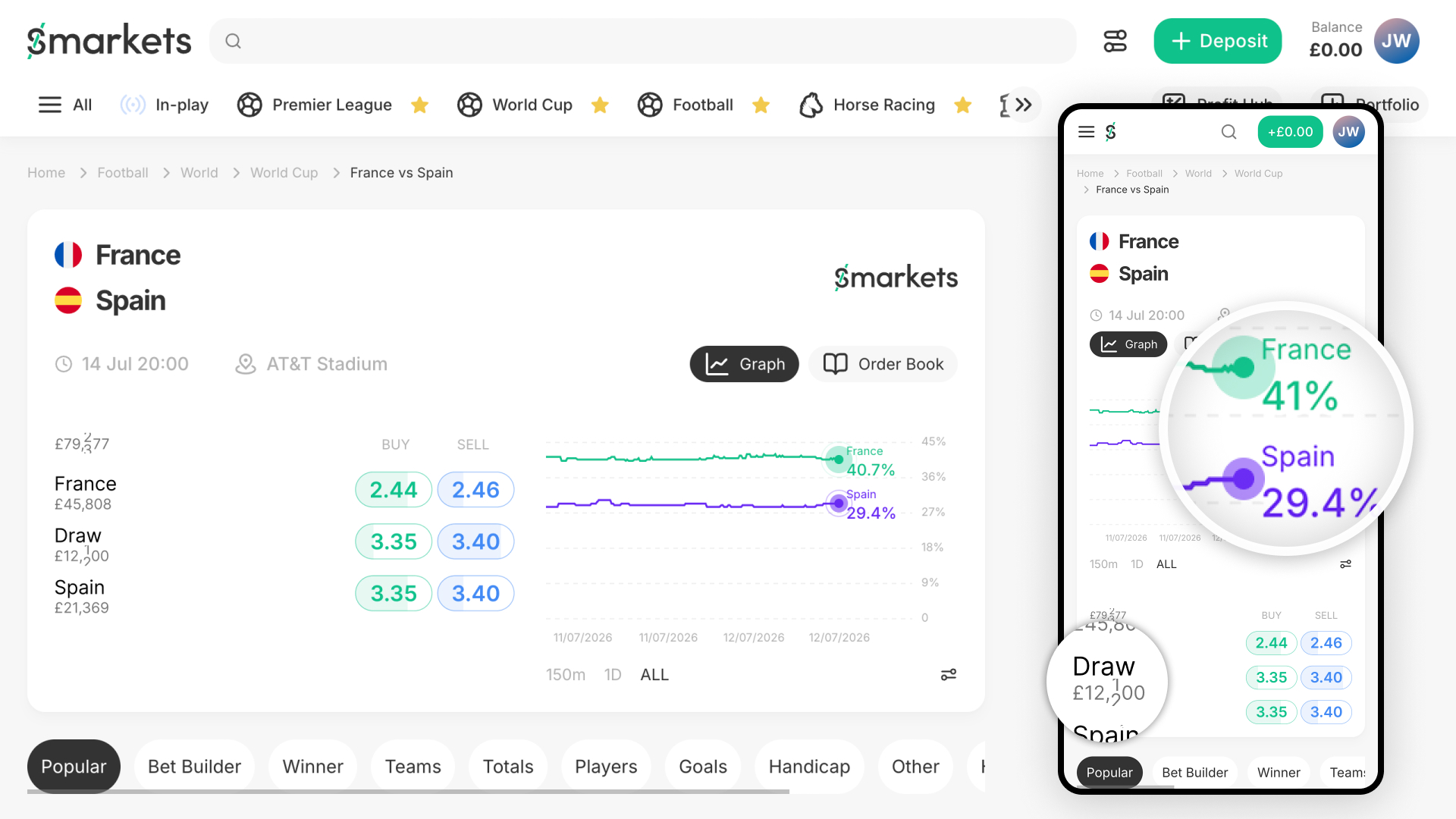
This isn’t an industry-wide problem. Other platforms manage to show this. Smarkets, specifically, doesn’t. Right now, a market is happening. Real money. Real people. Real decisions. But the interface doesn’t reflect any of it. It shows a price and a graph and calls it done. It’s missing the people.
The brief asks: “make the trading activity legible and felt.”
Our approach is simple: we’re not redesigning Smarkets. We’re injecting subtle animations and lightweight components into what already exists, the start of a shared motion language, a Momentum Framework, that future features can draw from rather than reinventing each time. Three small additions here that work together to create a heartbeat, with the same thinking able to carry into gamification, personalisation, or wherever else togetherness as a design idea ends up mattering.
None of these components are new inventions. Candlestick views, live counters, toast notifications, pulsing “live” indicators, all exist elsewhere, in trading terminals, in delivery apps, in ticket-booking sites. Jakob’s Law tells us why that matters: users spend most of their time on other products, and only a sliver of it on yours. Familiar patterns get understood instantly. Nobody has to learn what a pulsing dot or a counting number means, because they’ve already seen it somewhere else. We’re borrowing trust, not building it from scratch.
The result: markets that feel alive.


