Contents
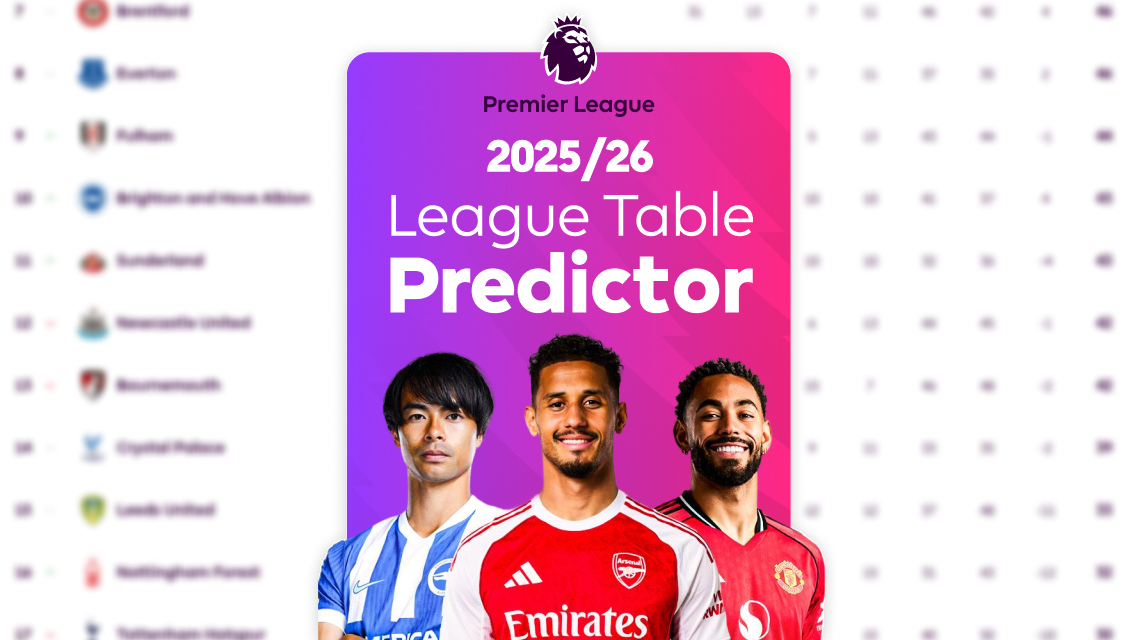
League Table Predictor 25/26
Converting legacy trivia mechanics into a high-value SaaS prediction engine.
1. Context
The commercial landscape of fan engagement at the start of the 2024 period was defined by a shift from passive consumption to active, participatory investment. As the Functional Head of Design and Product at Monterosa, I inherited a product library within our FanKit white-label web suite that was technically proficient but lacked a deep psychological hook. We possessed a series of “Elements” which were small, interactive widgets designed for high-concurrency environments. Among these was a sorting quiz mechanic. This legacy tool allowed users to drag and drop items into a correct sequence based on historical facts, such as ranking the top scorers of a previous season or ordering Formula 1 drivers by their career wins. While these trivia-based interactions were popular for short-term engagement, they suffered from a fundamental commercial flaw: they were “flat.” Once a user had completed a trivia task, the interaction was over. There was no reason to return, no ongoing emotional investment and no secondary lifecycle for the data generated.
From a product-led growth perspective, we identified that the roadmap required a shift from “backward-looking” trivia to “forward-looking” predictions. The business logic was clear. Predictions create a “Fresh Start” effect and foster long-term investment. If a user predicts a league table in August, they are emotionally and digitally tethered to that product until May. However, as is common in high-scale B2B SaaS environments, we faced a resource bottleneck. We knew the “Ladder Predictor” was a high-ROI feature for the FanKit library, but we lacked the internal capital to develop it as a speculative venture. We were trapped in a cycle of bespoke agency-style delivery, where our engineering resource was constantly consumed by immediate client demands rather than long-term platform scalability. We needed a “Tier-1” client to act as an anchor tenant, someone who would provide the capital to fund the development of the mechanic while allowing us to retain the intellectual property to standardise it as a SaaS Element.
When the Premier League approached us with a mandate for a suite of official games for the 2025/26 season, we identified the perfect strategic window. The Premier League is arguably the most valuable sports property in the world, with a global audience reaching into the hundreds of millions. Their legacy engagement strategy relied on high-volume, low-friction interactions that could withstand massive concurrency. They needed a flagship game to launch the season, something that would drive registrations for the “myPremierLeague” ecosystem and provide a consistent reason for fans to return to the official app and website. The stakes were high. A failure in the UI or a breakdown in the real-time data sync would be visible to a global audience and would damage the credibility of the FanKit platform at a time when we were pitching for major contracts with the NBA and FIFA.
We proposed the Table Predictor as a premium, bespoke-feeling experience, despite the fact that our internal goal was to use this project to build a robust, modular “Ladder Predictor” for our wider library. We attached a significant price tag to the project, justifying the cost through the complexity of the gamification logic and the “Poka-yoke” fail-safes required for such a high-profile brand. This was not just about building a game for one client; it was about the commercial survival of our SaaS pivot. We had to prove that we could deliver a Tier-1 experience while simultaneously engineering a “configuration over customisation” framework that would allow us to resell this exact logic to other leagues with minimal additional overhead. The Premier League provided the funding, the brand equity and the massive user base required to stress-test our new product architecture.
2. Intelligence
The strategic synthesis for the Table Predictor was rooted in the psychology of “The Ladder” and the inherent flaws of traditional sports trivia. Through our previous work on high-concurrency products like “Who Wants To Be A Millionaire” and “Quip,” we had gathered significant intelligence on what drives sustained user behaviour. Trivia is a test of memory, but predictions are a test of ego and expertise. The “Aha!” moment came from our analysis of leaderboard fatigue. In traditional games, once a user falls behind the top 1% on a global leaderboard, their engagement drops off a cliff. However, a table predictor functions differently. It is a slow-burn narrative. The intelligence suggested that fans do not just want to be right; they want to be proven right over time. This led to our shift from “event-led” urgency to “seasonal” investment.
We leveraged our existing gamification service to design a points-scoring mechanic that rewarded proximity rather than just binary accuracy. This was a critical piece of product intelligence. If a user predicts a team will finish 3rd and they finish 4th, a binary system gives them zero points, which is a “punishing” UX. By implementing a sliding scale of points (25 for an exact match, 19 for being one position off, down to a single point for being 19 places off), we ensured that the user felt “mostly right” for a longer period. This mechanic was designed to maximise the “return-to-app” rate. We hypothesised that fans would return to check their predictions not just when they were winning, but specifically during moments of league volatility, such as the January transfer window or the “Run-in” in March.
A major part of the discovery phase involved “Controlled User-Generated Content.” We knew that shareability was the primary driver for zero-cost user acquisition. However, the Premier League is a highly protected brand. Our intelligence showed that allowing users free-form text or custom image uploads was a significant risk for malicious or “naughty” content. The “Ladder Predictor” solved this by being a closed-loop system. Users were generating unique, personalised content (their specific 20-team table) without ever having the ability to input unvetted data. There are billions of possible combinations for a 20-team league table, meaning every fan’s prediction felt like a unique fingerprint. This created a sense of ownership that a standard “Pick 4” or “Man of the Match” vote could never achieve.
Furthermore, we identified the “Fresh Start” opportunity. Every season is a total reset of the competitive landscape. By launching the Table Predictor in the weeks leading up to the 15 August deadline, we tapped into the peak of fan optimism. The intelligence from our FanKit data indicated that engagement is highest when the “Unknown” is at its maximum. By closing the prize eligibility at the moment of the first kick-off (Liverpool v AFC Bournemouth), we created a hard deadline that drove massive spikes in registration. This wasn’t just a game; it was a data-capture engine disguised as a fan ritual. The business logic was to convert casual browsers into logged-in “myPremierLeague” members by gating the “Submit” button behind a mandatory authentication flow.
Finally, we had to account for the “Automated Content” reality. In our previous agency model, projects often required heavy manual management: updating scores, changing graphics and managing leaderboards. Our strategic mandate for FanKit was to eliminate this “Technical Debt.” The Table Predictor was designed to be a “Set and Forget” product. By integrating directly with real-time sports data feeds, the results would be automated. Once the user submitted their table, the system would handle the rest for the next nine months. This automation was not just a technical preference; it was a commercial necessity. It allowed us to deliver a high-value product to the Premier League without tying up our internal operations team in long-term maintenance cycles, effectively increasing our gross margins on the account.
3. Concept
The conceptual architecture of the Table Predictor was defined by the “Dual-Track” challenge: we had to build a flagship experience for the Premier League while simultaneously architecting the “Ladder Predictor” SaaS Element. This required a “configuration over customisation” mindset from day one. We could not afford to write bespoke code that only understood “Football” or “20 Teams.” Instead, we conceptualised a modular ranking engine. In the backend, the system saw a list of $n$ items with $x$ attributes. Whether those items were Premier League clubs, NBA teams or Formula 1 drivers was merely a configuration layer. This abstraction was the key to our SaaS strategy. It meant that the “Table Predictor” was simply a specific instance of our new “Ladder Predictor” Element.
The core UI mechanic was the “Hold, Drag and Drop” interaction. In our “Winner vs Rejected” ideation process, we explored several alternatives. We looked at dropdown menus for each of the 20 positions, but this was dismissed as being “cognitively heavy” and visually cluttered, especially on mobile devices. We also trialled a “Tap to Rank” system, but it lacked the tactile satisfaction of physically moving a team “up the table.” The drag-and-drop mechanic was chosen because it mirrored the natural language of football fans: “moving up the league” or “dropping into the relegation zone.” We spent significant time refining the “Drag-and-Drop” logic to ensure it was “Poka-yoke” (fail-safe). If a user dragged a team to position 5, the teams previously at 5 through 20 had to shift downwards in a fluid, non-jarring animation. This required a sophisticated front-end approach using React to manage the state of the list in real-time without refreshing the page.
To spice up the product and justify the Tier-1 price tag, we introduced the “Tiebreaker” concept. While the billions of combinations made a tie unlikely, at the scale of the Premier League, it was a statistical certainty. The concept of predicting the “Total Points of the Champion” was added as a secondary data-capture field. This served two purposes: it resolved the leaderboard logic and it provided the Premier League with another data point for fan sentiment analysis. We also conceptualised the “Personalised Shareable Graphic.” This was a dynamic image-generation service that would take the user’s specific table and render it into a high-quality branded asset. This was a critical part of the “Product-Led Growth” loop. By giving the user a “trophy” for their effort, we incentivised them to share it on social media, which in turn acted as a referral mechanism for new users.
The “Dual-Track” tension was most evident in the design of the “Sport-Agnostic” features. While the Premier League version used club crests and primary colours, the underlying “Ladder Predictor” was designed to handle various media types. We ensured the Element could support square images, circular avatars or simple text blocks. We also built in “Modular Navigation.” If a league had 20 teams, the UI needed to be a long, scrollable list; if it had only 5 teams (like a “Top 5 Scorers” prediction), it needed to fit within a single viewport. This flexibility was baked into the React components of the FanKit framework. We were not just designing a game; we were designing a template that could be deployed by any of our 26 enterprise clients with a simple JSON configuration change.
Finally, we had to address the “Legacy Audience Scale.” The Premier League has a diverse global fan base with varying levels of digital literacy and hardware quality. The concept had to be “Low Floor, High Ceiling.” The “Low Floor” meant that a casual fan could simply drag their favourite team to the top and hit submit in under sixty seconds. The “High Ceiling” was the “Points Predictor” and the deep-dive strategy of ordering all 20 teams. This inclusivity was a key selling point. We weren’t just building for the hardcore “stat-heads”; we were building a product that could be used by a fan in London on an iPhone 15 Pro and a fan in Lagos on a low-bandwidth Android device. This “Commercial Reality” of global scaling informed every architectural decision we made during the conceptual phase.
4. Execution
The execution phase was a hands-on exercise in “Poka-yoke” leadership. As the UX Lead and Product Manager, I had to ensure that the modular hub we were building was both high-performance and “idiot-proof” for our clients. The build was centred around the FanKit React toolkit. We created a modular system of cards and carousels that would house the Table Predictor. The most significant technical hurdle was the real-time data sync. We had to ensure that as a user moved a team from 20th to 1st, the state was being updated locally for a lag-free experience, while only “Syncing” to the backend upon final submission. This “Optimistic UI” approach was essential for maintaining the feeling of “Front-end Elegance” during periods of high network latency.
A critical part of the execution was the “Fail-safe” measures we implemented for non-technical customers. One of the primary goals of the FanKit SaaS pivot was to reduce the burden on our engineering team. We built a “Configuration Dashboard” that allowed the Premier League’s content editors to manage the game without touching a single line of code. They could upload team assets, set the prize descriptions and define the deadline themselves. This was a major “SaaS” win. By empowering the client to be self-sufficient, we eliminated the “Technical Debt” of mid-campaign change requests. We also implemented a robust validation layer. The system would not allow a user to submit a table if it was incomplete or if it contained duplicate teams, ensuring the data integrity of the millions of entries we were processing.
The “Ladder Predictor” mechanic required a sophisticated sorting algorithm that could handle the 20-team complexity on small screens. We executed a “Sticky Header” and “Draggable Handle” UI that allowed for precise movement even with large thumbs. We also integrated “Live Scores” and “Real-time Standings” into the post-submission view. Once the season started, the Table Predictor transformed from an input tool into a “Comparison Engine.” We built a view that overlaid the user’s predictions against the “Live” Premier League table. This required a seamless integration between our gamification service and the external Opta data feeds. The execution of this “Comparison View” was what provided the “Reason to Return.” Fans could see exactly how many points they were currently earning and where their “Expertise” was failing them.
Concurrency was the final boss of the execution phase. As the 20:00 BST deadline on 15 August approached, we anticipated a “Thundering Herd” of users. We implemented several layers of caching and used a “Serverless” architecture for the submission endpoint to ensure that the spike in traffic would not bring down the myPremierLeague ecosystem. We also executed a “Degraded State” mode. If the image-generation service for the shareable graphics became overwhelmed, the system would prioritise saving the user’s prediction data first and “Queue” the graphic generation for a later time. This “Poka-yoke” thinking ensured that even under extreme stress, the core commercial goal—data capture and registration—was never compromised.
Throughout the build, we maintained a strict focus on “Modular Navigation.” The Table Predictor was designed to be embedded as a “Card” within a larger “Games Hub” or as a full-screen standalone experience. We used CSS Grid and Flexbox to ensure the 20-team list adapted fluidly to different container widths. This modularity was not just for the Premier League; it was for the 25 other clients in our portfolio. By the time we reached the QA phase, we had a product that was “Premier League Ready” but also “NBA Ready” and “F1 Ready.” We had successfully used the execution of a bespoke project to harden a core SaaS asset, moving us closer to our goal of a high-margin, configuration-based revenue model.
5. Outcome
The outcome of the Premier League Table Predictor 2025/26 was a definitive proof of concept for the FanKit “SaaS” pivot. Culturally, the project was an immediate success. Within hours of launch, the “Personalised Shareable Graphics” began appearing across Twitter, Instagram and TikTok. We saw “YouTube pundits” and “Twitch streamers” using their predicted tables as the basis for their pre-season content, providing the Premier League with a massive amount of “Controlled User-Generated Content.” The “Shareable” was no longer just a graphic; it was a conversation starter that drove millions of organic impressions. This verified the “Product-Led Growth” loop we had architected. The game didn’t just engage existing fans; it actively recruited new ones through social proof.
From a commercial standpoint, the impact was profound. The project drove a sustained triple-digit growth in “myPremierLeague” registrations during the pre-season window. By gating the prize eligibility behind a login, we provided the Premier League with a massive pool of high-intent user data. The “Reason to Return” hypothesis was also validated. Our analytics showed that users were returning to the Table Predictor an average of four times per month throughout the season to compare their “Expertise” against the live results. This “Long-Tail Engagement” was a significant departure from the “Flat” trivia models of the past. It secured a multi-year contract extension with the Premier League, as the Table Predictor became a “Permanent Ritual” of their seasonal calendar.
For Monterosa, the “Ladder Predictor” became one of the most profitable Elements in the FanKit library. Because the development had been funded by the Premier League, our “Cost of Goods Sold” for subsequent sales was nearly zero. We successfully resold the mechanic to several other Tier-1 clients, including a “Top 10 Race Finishers” predictor for a major motorsport brand and a “Season Stat Leaders” game for a US-based basketball league. This was the “SaaS” dream realised: build once, sell many times. We had successfully transitioned from an agency that sold “Time and Materials” to a product company that sold “Scalable Interactions.” The revenue uplift from these “Experience Library” sales contributed to the 200% revenue growth noted in our annual reports.
The project also served as a “Cultural Proof” point for our “Poka-yoke” leadership. We had delivered a high-concurrency, Tier-1 experience without a single second of downtime during the “Thundering Herd” of the season opener. This “Product Stability” became a key part of our sales narrative. When we pitched to new clients, we could point to the Premier League as a benchmark for what our platform could handle. We had eliminated the “Technical Debt” of bespoke builds and replaced it with a “Turnkey” solution that was “Aggressively Right” for the market. The Table Predictor was not just a game; it was a strategic intervention that re-aligned our technical roadmap with the commercial reality of a scaling SaaS business.
Ultimately, the legacy of the 2025/26 Table Predictor was the permanent shift in our product philosophy. We stopped asking “What trivia can we build?” and started asking “What can we help the user predict?” We understood that the value of a digital product is not in the “Interaction” itself, but in the “Investment” the user makes. By building a tool that allowed fans to “own” their predictions for an entire season, we created a high-value asset that functioned as a data-capture engine, a referral mechanism and a retention tool all in one. The Table Predictor remains a definitive chapter in our journey from a bespoke agency to a high-margin SaaS powerhouse, proving that with the right anchor client and a modular mindset, you can turn a sorting quiz into a global fan ritual.