Second-screen experience for a primetime ITV game show, synchronised to the live broadcast and played by millions.
Client: ITV
Role: Lead UX Designer
Date: September 2019
Second-screen experience for a primetime ITV game show, synchronised to the live broadcast and played by millions.
Client: ITV
Role: Lead UX Designer
Date: September 2019

Five Gold Rings is a primetime ITV game show where contestants place a physical gold ring on a giant circular LED screen set into the studio floor, attempting to circle the requested target. ITV came to us because we were specialists in second-screen experiences and our back-end platform (Monterosa / Interaction Cloud) had already scaled to millions of concurrent users for Love Island voting, I’m a Celebrity, X Factor and more. We designed the complete home-play experience from zero, launching alongside series three.
Series one and two had already aired with rule changes between them. We knew changes could come right up to launch and potentially in the future, so we stripped the mechanics back to something format-agnostic with just one interaction; drop a ring on the image and score points based on accuracy. No variable ring sizes. No tiered point values. If the show changed its rules, our game wouldn’t break.
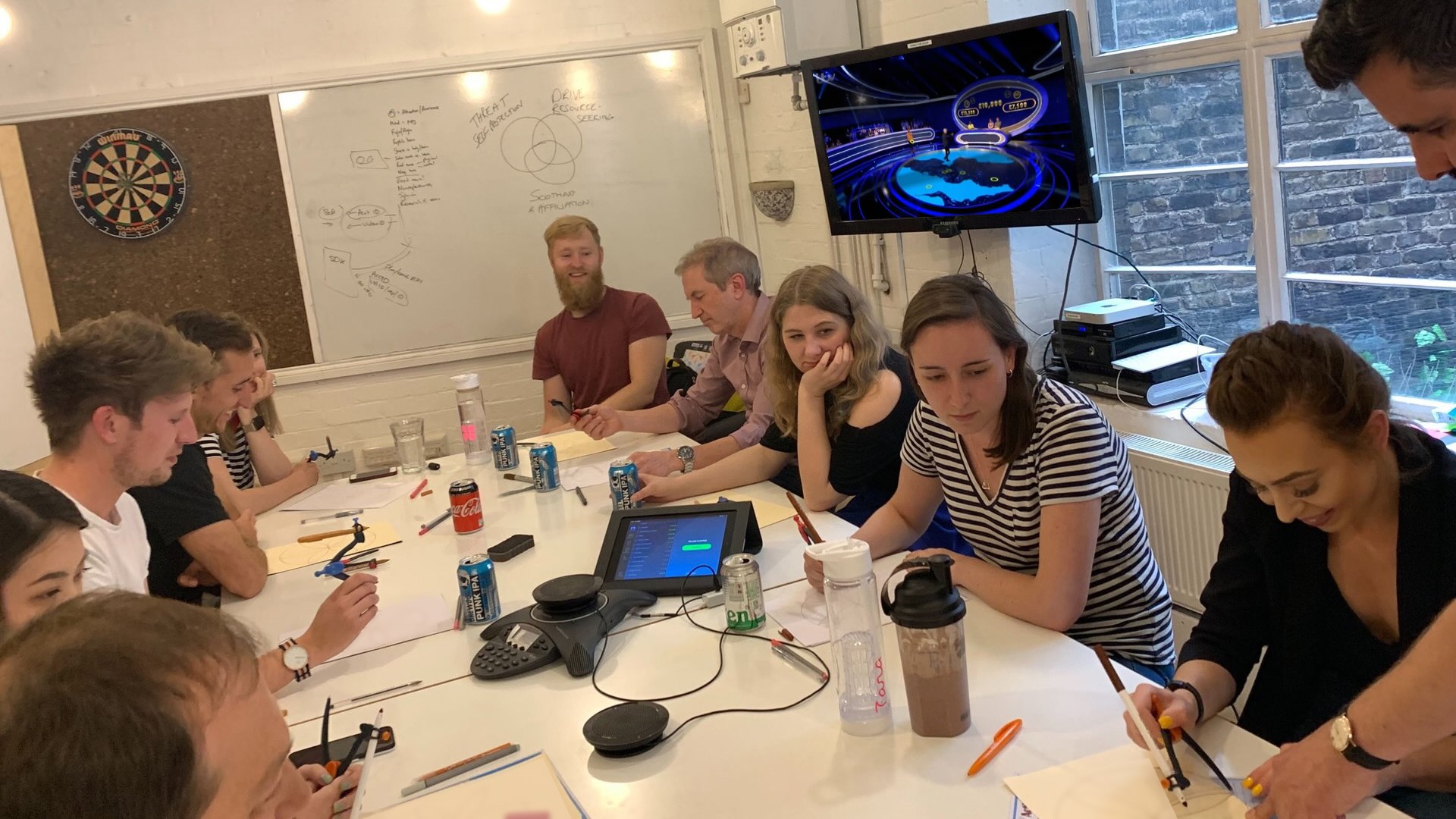
We paper prototyped around a table with old episodes of the show running on the television. Early user journeys were mapped, tested and refined before anything went near a screen.
The TV show gave contestants 30 seconds to place their ring. We gave home players the same 30 seconds. Question reveals and countdown timers were always synchronised to ITV’s real broadcast time – our platform operated at sub-one-second latency, so even viewers on slower TV streams were playing against the same clock as everyone else. 
We designed the app to feel alive when the user needed to interact and asleep when they didn’t:
 Active: colour, animation, sound effects. Active: colour, animation, sound effects. |
 Inactive: static, darkened, silent Inactive: static, darkened, silent |
During introductions, presenter chat, contestant moments and ad breaks, interstitial screens surfaced leaderboards or advertising – visible but passive, never competing for attention that belonged to the television.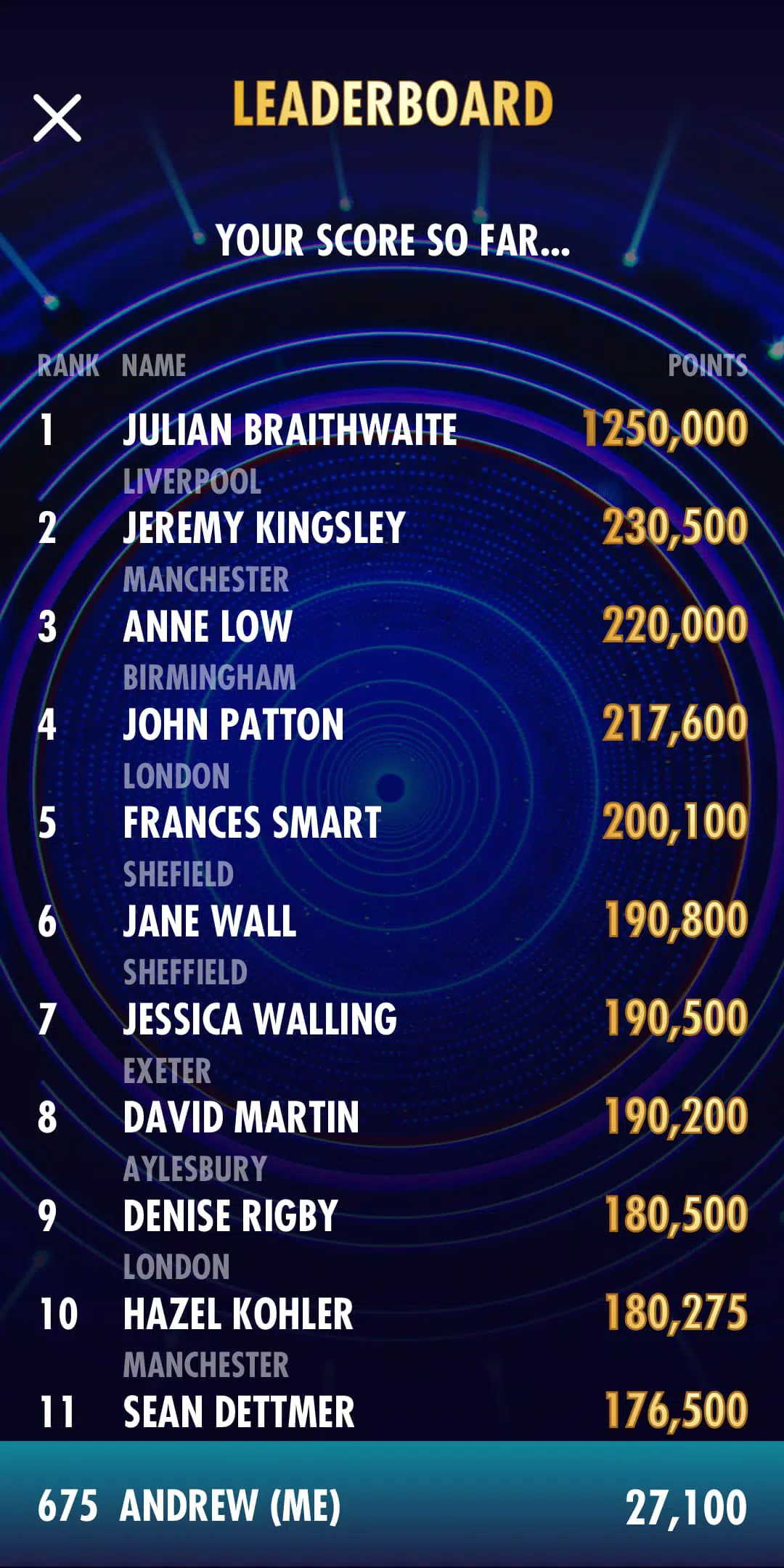
Players signed in with an ITV Hub account to participate and their city was made a mandatory field to play (previously optional in ITV’s system). That single decision did two things: it measurably increased the completeness of ITV’s identity data and it made the scores meaningful at a geographic level.
Because we knew where every player was from, scores could be broken down by region, county and city in real time. The presenter could call out which city was leading an episode, which region had nailed a particular question, which hometown had just lost the lead. Players at home stopped feeling like individuals and started feeling like they were representing somewhere.
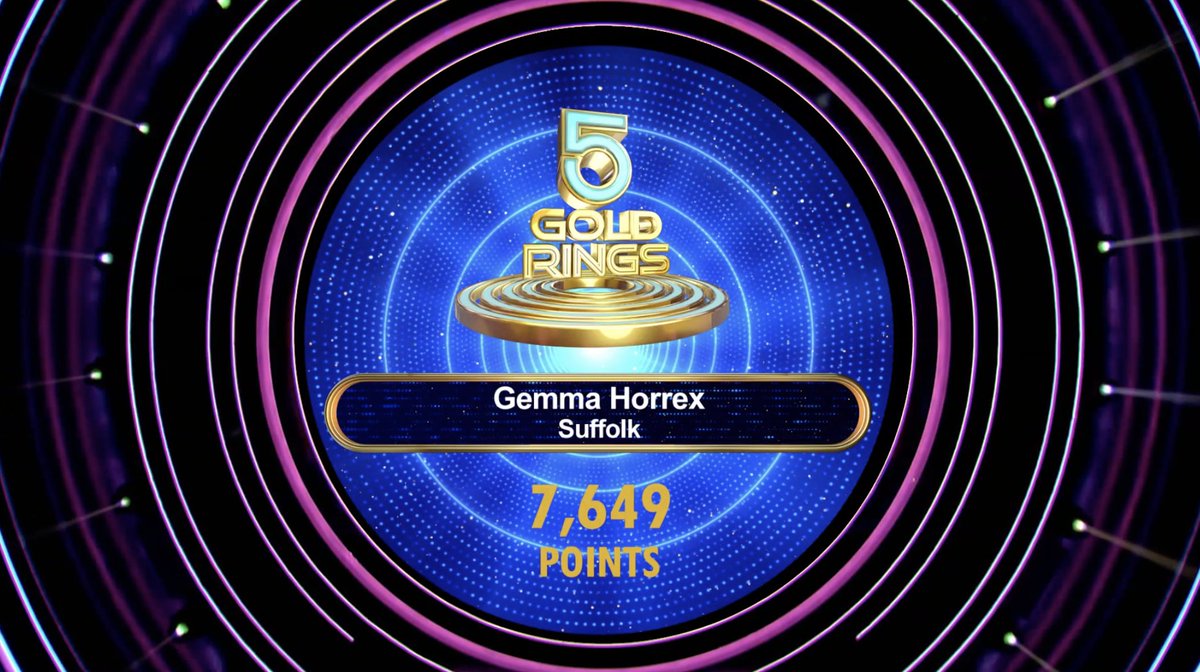
The experience launched successfully alongside series three and was licensed by international versions of the show.
Making a single optional form field mandatory (city) unlocked the geographic data that powered the show’s most memorable on-screen moments and made millions of people feel like they were playing for their hometown.


